



Saving Hope: Tashme Historical Society’s Journey to Preserve a Site of Japanese Canadian History
Tashme Historical Society, Hope and B.C. heritage supporters saved the historic CPR Train Station in Hope, and were supported by three distinct National Trust programs to make it happen.
As the Tashme Historical Society in B.C. was getting started in 2020 they discovered the National Trust for Canada’s Historic Places Days—an annual July festival showcasing 900 historic sites nationwide and collaborating with them to share stories and attract visitors.
They quickly joined to raise awareness of the Tashme Internment Camp located in modern-day Sunshine Valley, near Hope, B.C.—Canada’s largest Japanese Canadian internment site during the Second World War. That year, Tashme won the HPD VisitList campaign, earning $5,000 to support efforts to preserve and share its untold story.
A Launch Pad Coaching grant, funded by donors, to support the Historical Society’s efforts and grow capacity in fundraising and communications soon followed. The Tashme Historical Society manages the Sunshine Valley Tashme Museum, located within the original Tashme butcher shop. The Historical Society was also supported with expertise and community engagement from the Nikkei National Museum & Cultural Centre in Burnaby, B.C. and the Japanese Canadian Cultural Centre in Toronto, Ontario.
Pre-pandemic, the 1916 CNR Hope Station, previously located in central Hope in the Fraser Valley, B.C., had been much loved but was facing demolition. It needed a new location, a new purpose, and a facelift. In 2020, a grassroots community campaign, assisted by the Tashme Historical Society, rose up to save it. A not well-known historical fact was brought forward by the Tashme Historical team that in 1942, over 8000 Japanese Canadians crossed the train platform on their way to internment camps throughout the interior of BC, including 2644 men, women, and children who were forcibly relocated to the Tashme Internment Camp, Canada’s largest internment camp, located 19 km east of Hope. Inspired, the Tashme Historical Society in partnership with the District of Hope, developed a plan to rehabilitate the station into a vibrant storytelling hub with a museum & visitor centre, restaurant, and co-work office space.
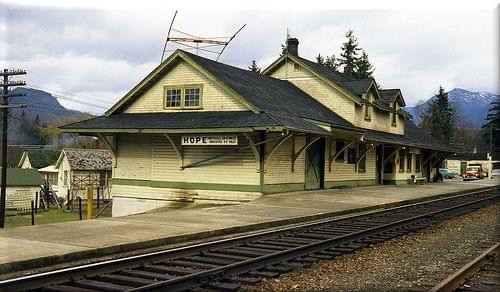
Image Credit: Hope Station, Hope, B.C., in 1965, Tashme Historical Society
Thus, the concept of a “Gateway to our stories, a Gateway to hope”. のぞみ駅 (nozomi-eki) – ‘a station of hope’ was born!
The vision was to create the feeling of belonging in this space for stories that had yet to be told. With this vision came the ambition to get the project off the ground. The Historical Society entered, at that time, the new Next Great Save Competition of the National Trust in 2022 to save the Hope CNR Train Station and relocated it, to become a key part of the new Hope Tourism Centre. The community supporting the Hope Train Station voted and promoted hard for the Tashme Historical Society, who won 3rd Prize and $5,000 in the first year of the Next Great Save!
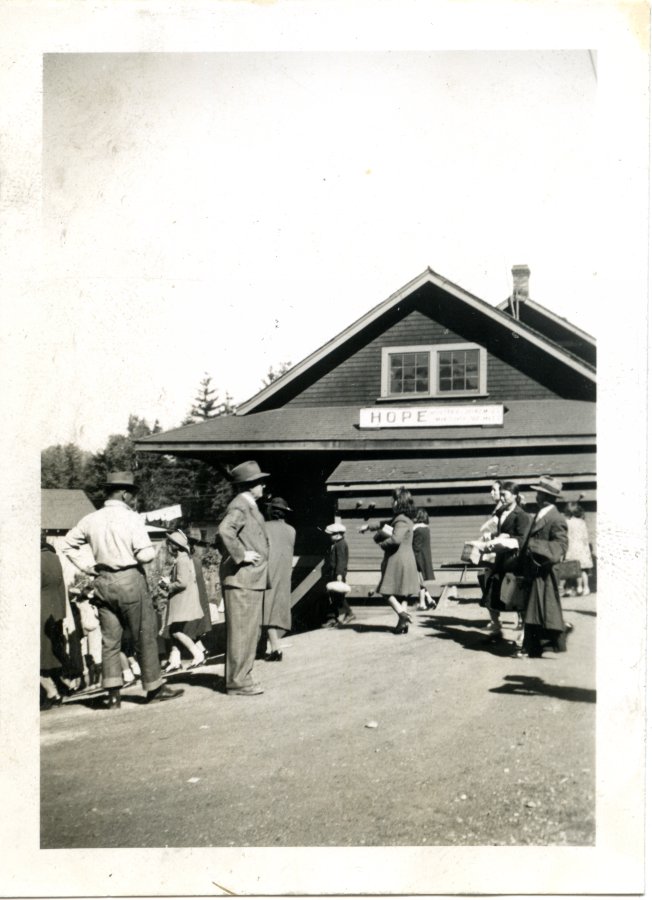
Image Credit: Japanese Canadians at the Hope Station in 1942, Tashme Historical Society
And in 2024, the vision became a reality, and the Station was moved! On February 2024, the station was loaded the 2,567-square-foot station onto a trailer and drove it a couple of blocks to a new home at 919 Water Ave. in Hope where it will begin a new life as a visitor centre, and community hub for the Hope region.
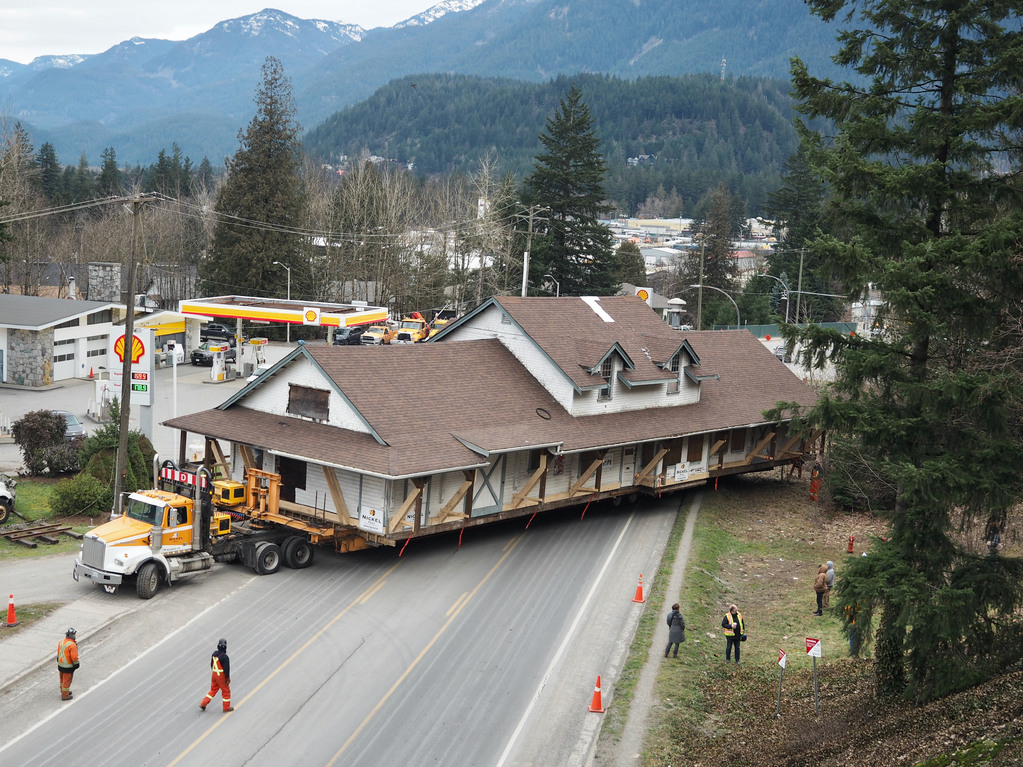
Image Credit: The Move of the Hope, B.C. CNR Train Station to its new home, February 16th, 2024. Photograph by Barry Stewart
At Tashme proper, the Historical Society has not slowed down, and the Sunshine Valley Tashme Museum has continued to expand, and now includes a Research & Archive Centre, multipurpose building and garden area, with ongoing improvements and renovations planned.
The Tashme story is a powerful example of what it takes to save, share, and sustain historic places for the future. Congratulations to the Tashme Historical Society, and gratitude to all our donors who contribute to making long‑term projects like this possible.
The Society was initially founded by Ryan Ellan, who had come across internment era artifacts while restoring one of the original Tashme buildings. Read the Story Here