


Passport Places: Timber, Tradition, and Canadian Stories
Log houses have deep roots in Canada’s story.
Indigenous peoples on the Northwest Coast used log frameworks to support their large plank houses long before settlers arrived, and later newcomers relied on the country’s forests for quick, dependable shelter. Early homes in New France shifted from simple vertical-post structures to the pièce sur pièce method, which set short horizontal logs into upright posts. Fur traders carried this style west, where it became standard for Hudson’s Bay Company posts. Other regions developed their own approaches as Loyalists, European immigrants, and prairie settlers adapted familiar building traditions to local conditions.
Although many early log homes were eventually replaced, the form never disappeared. Log buildings remained practical in northern and remote regions and later became popular with cottagers and anyone drawn to traditional construction.
Across Canada, several sites preserve this history. The places below show how log buildings looked, functioned, and evolved in different communities.
Buxton Museum, Buxton, ON
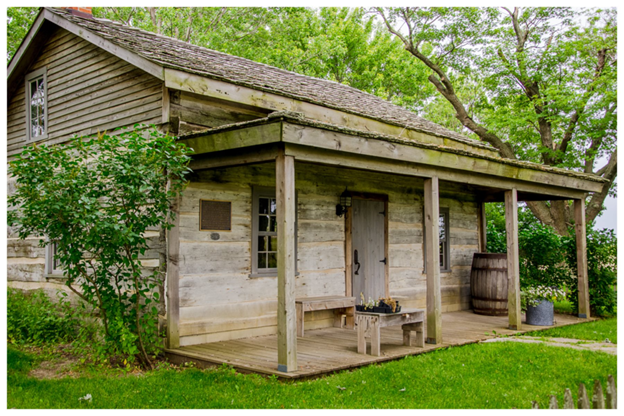
Photo Courtesy of Buxton Museum
Located on the original site of the Elgin Settlement, a terminus of the Underground Railroad and one of four organized Black settlements in Ontario, is Buxton Museum. Founded in 1849, the community was self-sufficient and was home to approximately 2,000 people and its peak. The site features an 1852 log cabin, which was last owned by the Henderson family.
The cabin was built according to strict guidelines that were set at the settlement’s founding, which included size restrictions and necessitated a minimum of two bedrooms, a flower and vegetable garden, and a picket fence. These regulations ensured that homes were built to a high standard and proved to locals who disapproved of the settlement that Black settlers were capable of building thriving and successful settlements. The cabin offers a glimpse into the type of homestead that would have been typical for settlers of the time.
The rest of the museum site features other heritage buildings like the 1861 Schoolhouse, local cemeteries, and the Shadd barn.
Visit their website to learn more.
Scarborough Museum, Scarborough, ON
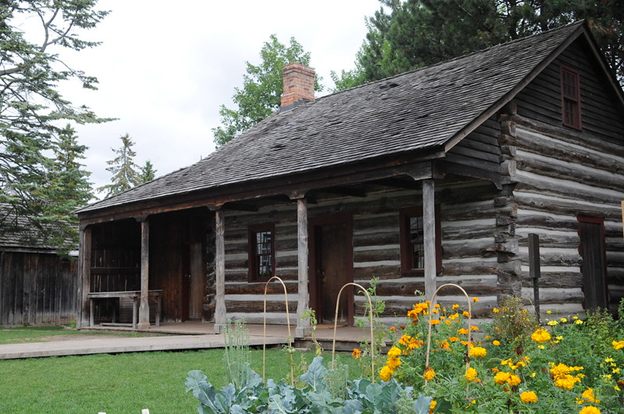
Photo Courtesy of Scarborough Museum
In the heart of Thomson Memorial Park in Scarborough are four heritage buildings that make up the Scarborough Musuem – one of which is the McCowan Log House.
The building was bult by William P. McCowan in the 1830s on 100 acres of land alongside Wilcot Creek in the northeast part of Scarborough. McCowan and his family, who immigrated to Scarborough from Scotland in 1833, lived in the house until his death in 1848. Over the years, the building has undergone changes and renovations, including the entire building being moved to a new location in 1948, and again to its present location at Scarborough Museum in 1974.
Today, the cabin is restored and furnished to portray life in the 1850s.
Visit their website to learn more.
Fort la Reine, Portage la Prairie, MB
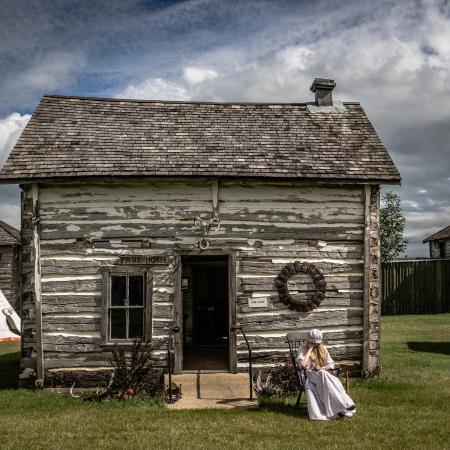
Photo Courtesy of Fort la Reine
Fort la Reine was built on the Assiniboine River in 1738 and was used as a fur trading post as well as a base for exploration of the north and west. Though the original fort no longer remains, it has been reconstructed and is open as a museum, and many original heritage structures are now located within the museum. One such heritage structure is the Paul House (formerly Hamilton house), which was built by John Wark in 1879 using timbers cut from the Assiniboine River.
Today the Paul House is part of a series of heritage buildings at the museum that tell the story of early pioneers’ hardships and ambitions and invites visitors to immerse themselves in the past.
Visit their website to learn more.
Doukhobor Dugout House, Blaine Lake, SK
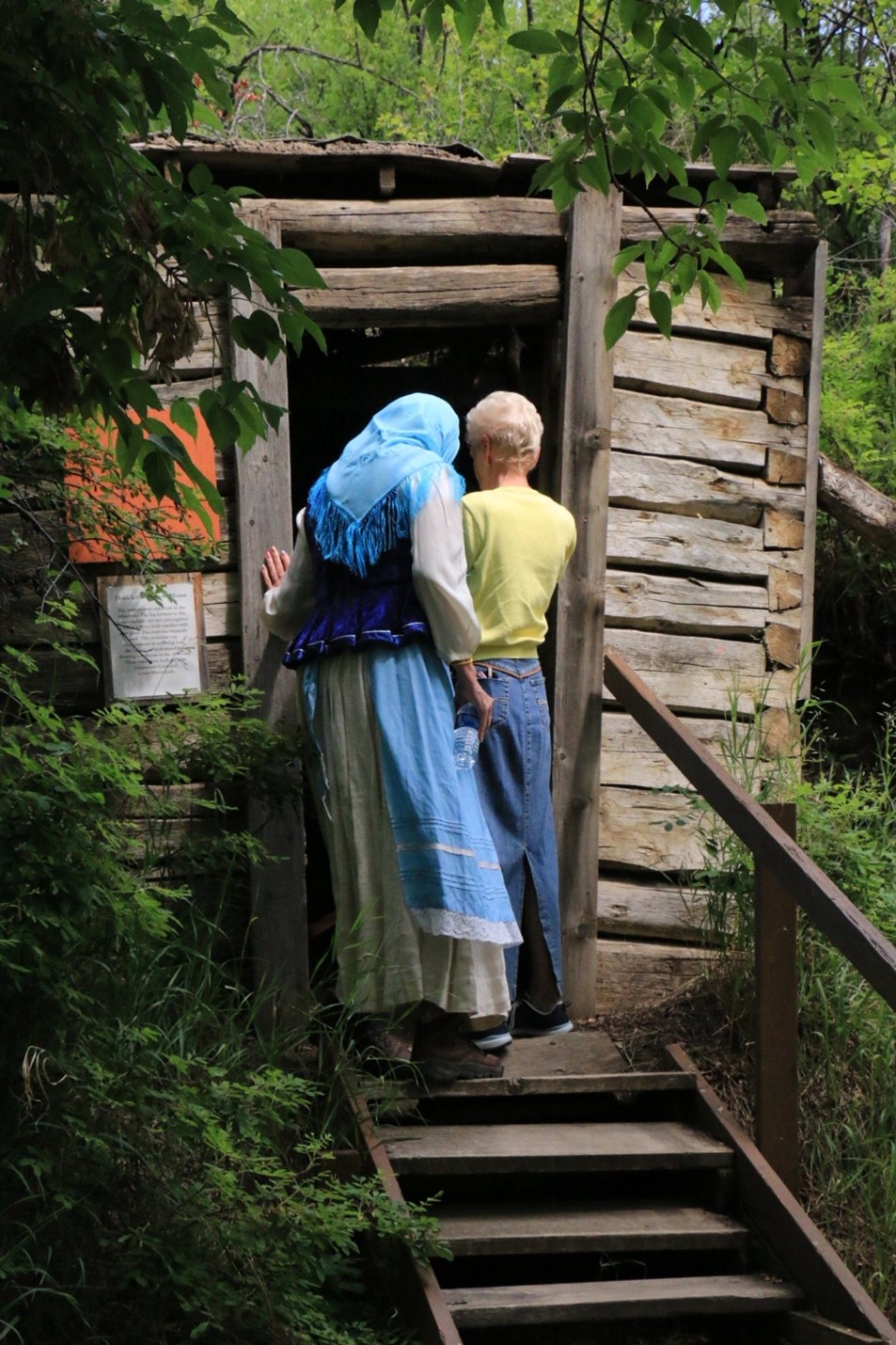
Photo Courtesy of Doukhobor Dugout House
The Doukhobor Dugout House is not a traditional log cabin but is a type of structure unique to settlers of Western Canada who constructed dugout houses using impermanent construction methods. It is the only known example of this type of shelter in the region, though at one time there would have been many such structures in the prairies.
According to archaeological evidence, approximately 300 people lived in dugout houses in the area, and one dugout house would have been home to 9 families who cooked and slept in the 436 square foot area. After the families left to move into the nearby village of Oospenie, the house continued to be used for other purposes. The dugout house was designated a National Historic Site in 2008.
Visit their website to learn more.
Métis Crossing, Smoky Lake, AB
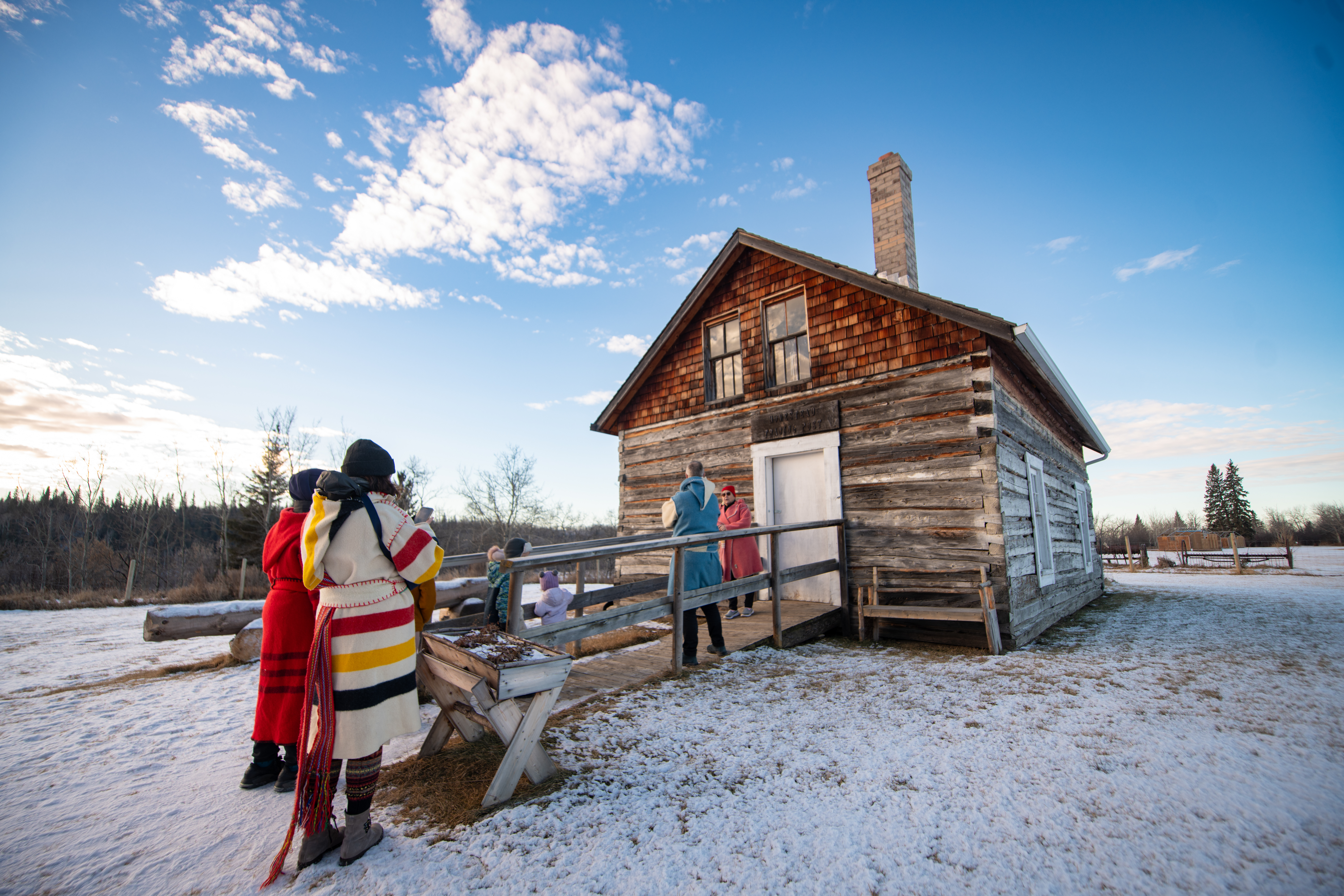
Photo Courtesy of Métis Crossing
Métis Crossing is home to modern facilities for guests, as well as a collection of historic buildings that tell the story of the Métis. One of these buildings, a 19th century log cabin called Cromarty House, invites visitors to experience traditional Métis values and knowledge through hands-on learning and play. The house is furnished with decorative arts like beading, rag rugs, and more, all of which brings the story of the Cromarty family and other river lot families to life.
Visit their website to learn more.
The above historic sites are part of the Trust’s Passport Places program, a National Trust membership benefit that provides free access to over 110 historic places in Canada, as well as 1000+ National Trust places abroad. Become a member today!