


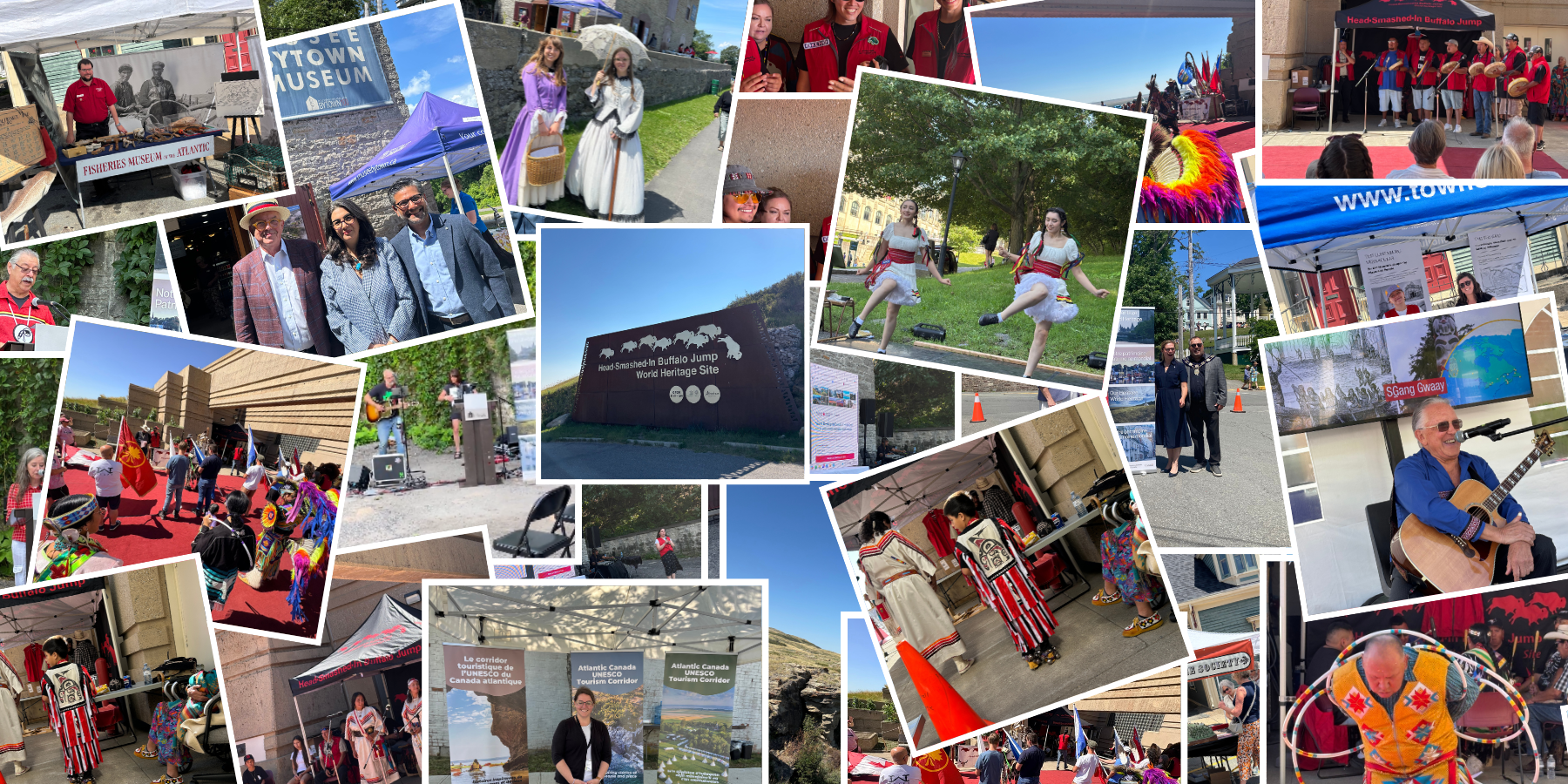


A Summer of Celebration: A Look at the National Trust’s Events for the 50th Anniversary of World Heritage in Canada
On July 23, 1976, Canada joined the UNESCO Convention Concerning the Protection of the World Cultural and Natural Heritage, better known as the World Heritage Convention. Fifty years later, the National Trust for Canada marked this milestone by bringing Canadians together at three World Heritage sites across the country.
From the Rideau Canal in Ottawa, Ontario, to Old Town Lunenburg in Nova Scotia and Head-Smashed-In Buffalo Jump in Alberta, the celebrations offered three diverse expressions of what World Heritage means in Canada. Together, they brought more than 1500 people together in person and engaged over 1 million more online to celebrate these remarkable places and reflect on Canada’s participation in the Convention, 50 years on.
The anniversary offered an opportunity to celebrate Canada’s World Heritage legacy, introduce more Canadians to the World Heritage sites that form part of our story, and spark critical conversations about how we can better protect these places, along with other heritage sites across Canada, in the future.
Rideau Canal: Celebrating Technological Innovation and Local Traditions
The celebrations began on July 23 at the Bytown Museum and Ottawa Locks, located at the Rideau Canal World Heritage site.
The event opened with a traditional welcome from Councillor Merv Sarazin of the Algonquins of Pikwakanagan First Nation, who shared the story of the land on which the canal was built.
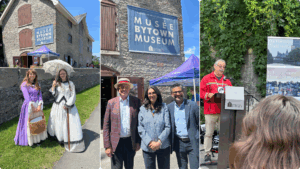
The National Trust hosted the first of a series of celebrations on July 23 at the Rideau Canal World Heritage site in Ottawa, Ontario. Left: Costumed interpreters from the Bytown Museum located on the Ottawa Locks. Middle: Grant Jameson, Dr. Shabnam Inanloo Dailoo, MP Yasir Naqvi. Right: Councillor Merv Sarazin of the Algonquins of Pikwakanagan First Nation opening the event.
National Trust CEO Patricia Kell and Board Chair Dr. Shabnam Inanloo Dailoo also addressed the crowd, sharing reflections on Canada’s role in World Heritage. They were followed by local MP Yasir Naqvi, a friend of the heritage community, and Chloe Dennis, Curator at the Bytown Museum.
Visitors could explore the Bytown Museum for free, join guided tours of the Ottawa Locks, test their knowledge with an interactive World Heritage quiz and capture the day in a photo booth.
Music and dance brought additional perspectives to the site’s history. The Celtic Kitchen Party performed Irish fiddle music in recognition of the Irish workers who helped build the Rideau Canal, while the Lyons Sisters Métis Jiggers shared Métis dance and cultural education through performances and demonstrations.
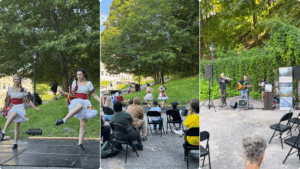
Left/Middle: Lyons Sisters Métis Jiggers. Right: Celtic Kitchen Party.
Old Town Lunenburg: Celebrating 30 Years as a World Heritage Site
Two days later, the celebration moved to Old Town Lunenburg, where the anniversary coincided with another important milestone: the community’s 30th anniversary as a UNESCO World Heritage Site.
The event brought together local, provincial and national voices, including Member of Parliament Jessica Fancy, Member of the Legislative Assembly Susan Corkum-Greek, and Mayor Jamie Myra, who each spoke about their connection to the town and the significance of its World Heritage designation.
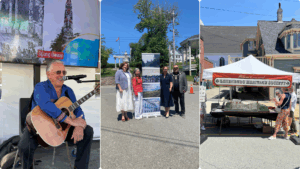
On July 25, a second event took place at the Old Town Lunenburg World Heritage site in Nova Scotia. Left: Dr. Bernard Francis playing the guitar during his fireside conversation. Middle: MLA Susan Corkum-Greek, National Trust CEO Patricia Kell, MP Jessica Fancy, and Mayor Jamie Myra. Right: Lunenburg Academy Booth.
Dr. Bernard Francis, a member of Membertou First Nation, educator, linguist and storyteller, opened the event with a Peace Chant for Truth and Reconciliation, followed later by a fireside conversation and music.
Across Lunenburg, visitors explored the town through walking tours and information stations hosted by local heritage organizations, including the Town of Lunenburg, the Fisheries Museum and the Lunenburg Academy. An “Ask a Heritage Expert” session also gave visitors an opportunity to put their questions directly to World Heritage experts.
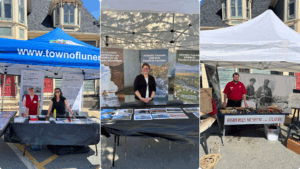
Booths representing organisations across Lunenburg. Left: Town of Lunenburg. Middle: Atlantic Canada UNESCO Tourism Corridors. Right: Fisheries Museum.
Head-Smashed-In Buffalo Jump: Celebrations of Culture and Living Heritage
The final celebration took place on July 29 at Head-Smashed-In Buffalo Jump, where more than 800 visitors gathered for a day of Blackfoot cultural programming, performances, demonstrations and activities.
The day’s programming began with singing, drumming and dancing, creating a powerful opening to the celebration. Head-Smashed-In Buffalo Jump Site Manager Aaron Domes then welcomed visitors, followed by a parade of flags and the honouring of Elder Wilfred Yellow Wings and his wife, Barbara. Wilfred Yellow Wings shared words with visitors before an honour dance.
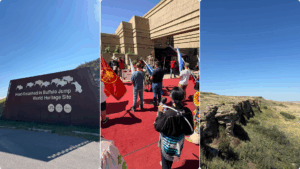
Only July 29th a third celebration took place at Head-Smashed-in Buffalo Jump World Heritage site in Alberta. Left: Head-Smashed-In Buffalo Jump entrance. Middle: Parade of flags. Right:
Throughout the day, visitors experienced additional drum and dance demonstrations, performances by Kiitokii and the Kainai Grass Land Singers, storytelling, trivia and prizes. A culinary presentation introduced visitors to buffalo stew and its cultural significance.
Visitors could also participate in guided tours, try an atlatl throwing activity and explore a children’s archaeological lab.
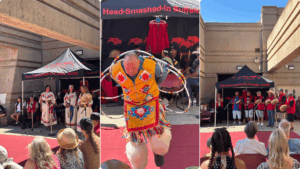
Left: Olivia Tail Feathers and members of the Kainai Grass Land Singers perform during the day’s celebrations. Olivia is pictured on the right. Middle: Hoop dancer Jerry First Charger performs for attendees. Right: Featured drummers and singers for the day, from left to right: Patrick Bad Eagle, Landon Bad Eagle, JR Bad Eagle, Marcus Healy, Shane Across the Mountain, and Philip Crying Head. Photos by Aarin Shapiro and Amanda Foote.
Reflecting on 50 Years of World Heritage in Canada
Since joining the Convention in 1976, Canada has had 22 properties inscribed on the World Heritage List, served four times on the World Heritage Committee and hosted the Committee’s meetings twice. Canada’s participation has influenced heritage conservation practices and helped amplify Indigenous voices, values and knowledge within World Heritage.
The summer events brought that legacy into the present, connecting Canadians with the people, stories and communities that give these places meaning.
What is Next?
This fall, the National Trust will launch a social media campaign introducing Canadians to all 22 of Canada’s World Heritage sites through a series of educational videos. The campaign will invite Canadians to learn more about these places, consider the stories and values they represent, and reflect on what World Heritage means in Canada today—and what it could mean for the future.
The campaign will culminate on November 13, when the National Trust brings together heritage practitioners, World Heritage Site representatives, Indigenous voices and others for a National Conversation on World Heritage in Canada.
Taking place in person in the World Heritage Site of Old Québec and virtually, the event will explore how the Convention has shaped heritage conservation in Canada over the past 50 years—and how Canada, in turn, has helped shape World Heritage.
As Canada looks toward the next 50 years, the anniversary offers an opportunity to ask not only what we have inherited, but what we have a responsibility to pass on.
The National Trust for Canada’s 50th Anniversary World Heritage project is funded in part by the Government of Canada.