


The War of 1812 in Seven Passport Places
The origins of the War of 1812 date from years before 1812 with the Napoleonic Wars in Europe, which began in 1799 and ended after the War of 1812 in 1815. The Napoleonic Wars caused Great Britain to adopt measures that aggravated the United States and impacted American trade with European Nations. American President James Madison declared war on Great Britain on June 18, 1812. Canada, being a colony of Great Britain at the time, was a major target for American invasion, events that are recalled at seven Passport Places today.
Much of the War of 1812 took place across the Great Lakes and on their shores – after all, Upper Canada was much closer than Great Britain. As had been the case during the revolutionary war, loyal Black soldiers served with the British based on promises of emancipation. Indigenous peoples allied with the British during the War of 1812, with leaders such as Tecumseh supporting the British to resist American expansion into Indigenous lands.
Despite happening over 200 years ago, the War of 1812 has had a lasting effect on Canadian national identity. The legacy of this conflict and the people who were involved are remembered at these Passport Places throughout Southern Ontario.
François Baby House, Windsor, ON
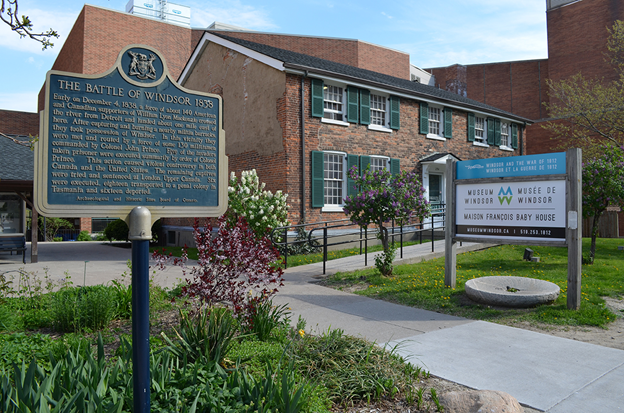
François Baby House | Museum Windsor
This historic house, once the home of local politician François Baby, witnessed the invasion of Upper Canada via the Detroit River in July 1812. The house, which was still under construction, was commandeered by the Americans and General William Hull, who built defensive works around the three inland sides of the house and established an American camp in the orchard. The Americans held this position and used the house as their headquarters until August of 1812 when Hull retreated back across the Detroit River to Fort Detroit. The British, led by General Isaac Brock, took control of the house and its strategic location on the Detroit River, building an artillery battery for four guns on the property which would be used to fire upon Fort Detroit and force the surrender of the fort to the British.
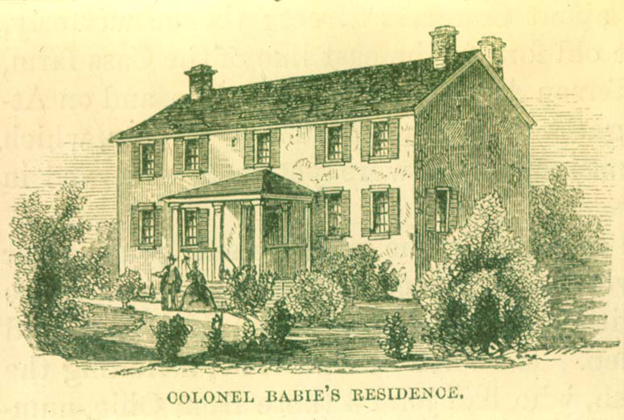
This sketch by Benson John Lossing (1813-1891), was published in 1869 The Pictorial Field Book of the War of 1812
The François Baby House would witness another conflict, as the Battle of Windsor would take place on its doorstep in December 1838 as part of the Rebellion of 1837-1838.Today, the François Baby House is part of Museum Windsor and a designated National Historic Site. Visitors can explore permanent galleries that detail the home’s connection to the War of 1812 and the Battle of Windsor. They also feature exhibits on the home itself and Francophone heritage.
Fort York, Toronto, ON
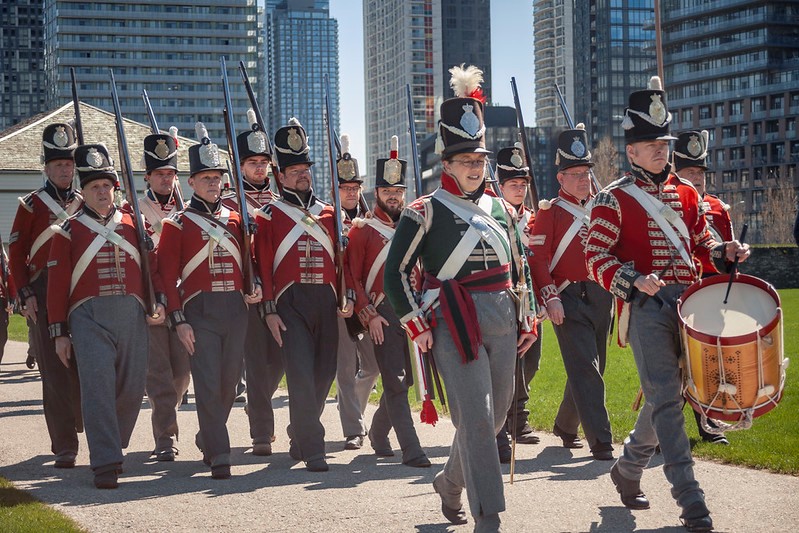
Fort York | City of Toronto
Located in the heart of downtown Toronto is Fort York National Historic Site, a 43-acre archaeological park with Canada’s largest collection of original War of 1812 buildings. It was the site of the Battle of York.
In the early morning hours of April 27, 1813, 16 American ships landed in York (now Toronto), the capital of Upper Canada. The fort had a small British garrison, and York’s defenders were made up of approximately 100 local Anishinaabeg warriors, and 800 British regulars and Canadian militia. Despite their efforts to hold off the attackers, the overwhelming American numbers forced the British commander, Sir Roger Hale Sheaffe, to order a retreat and abandon Fort York. He also ordered the destruction of military supplies to prevent them from falling into American hands, including burning of two warships under construction in the town’s shipyard. The 30,000 lbs of black powder stored within the Fort’s Grand Magazine was also detonated, resulting in a massive explosion that killed or wounded nearly 250 American troops.
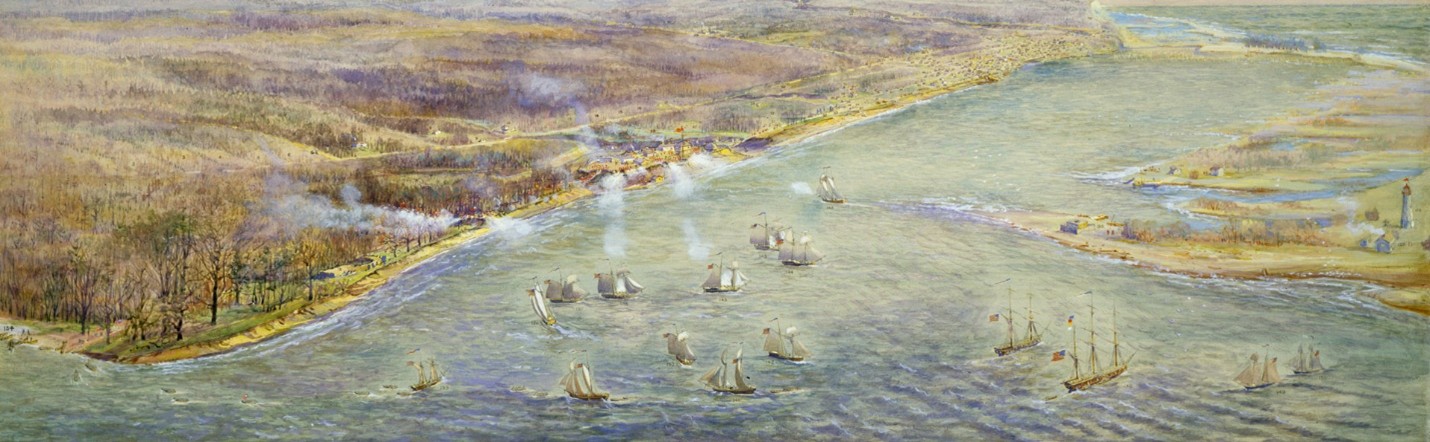
The American fleet arriving at York prior to its capture. Owen Staples (1866-1949). | Toronto Public Library, reference number JRR 905.
The Americans occupied the city for 6 days, sacking houses, businesses and public buildings as well as setting fire to the Parliament building, Government House and destroying the local printing press. The battle and capture of York was a significant defeat for the British, and a much-needed victory for the Americans, following several major defeats at the start of the war. The burning of York was balanced with the burning of the White House in Washington by British forces in 1814.
Today, Fort York is open to the public and includes exhibits about the history of the fort, the Battle of York, and the history of the city of Toronto as it transformed into the metropolis it is today.
Battlefield House, Stoney Creek, ON
Battlefield House | City of Hamilton
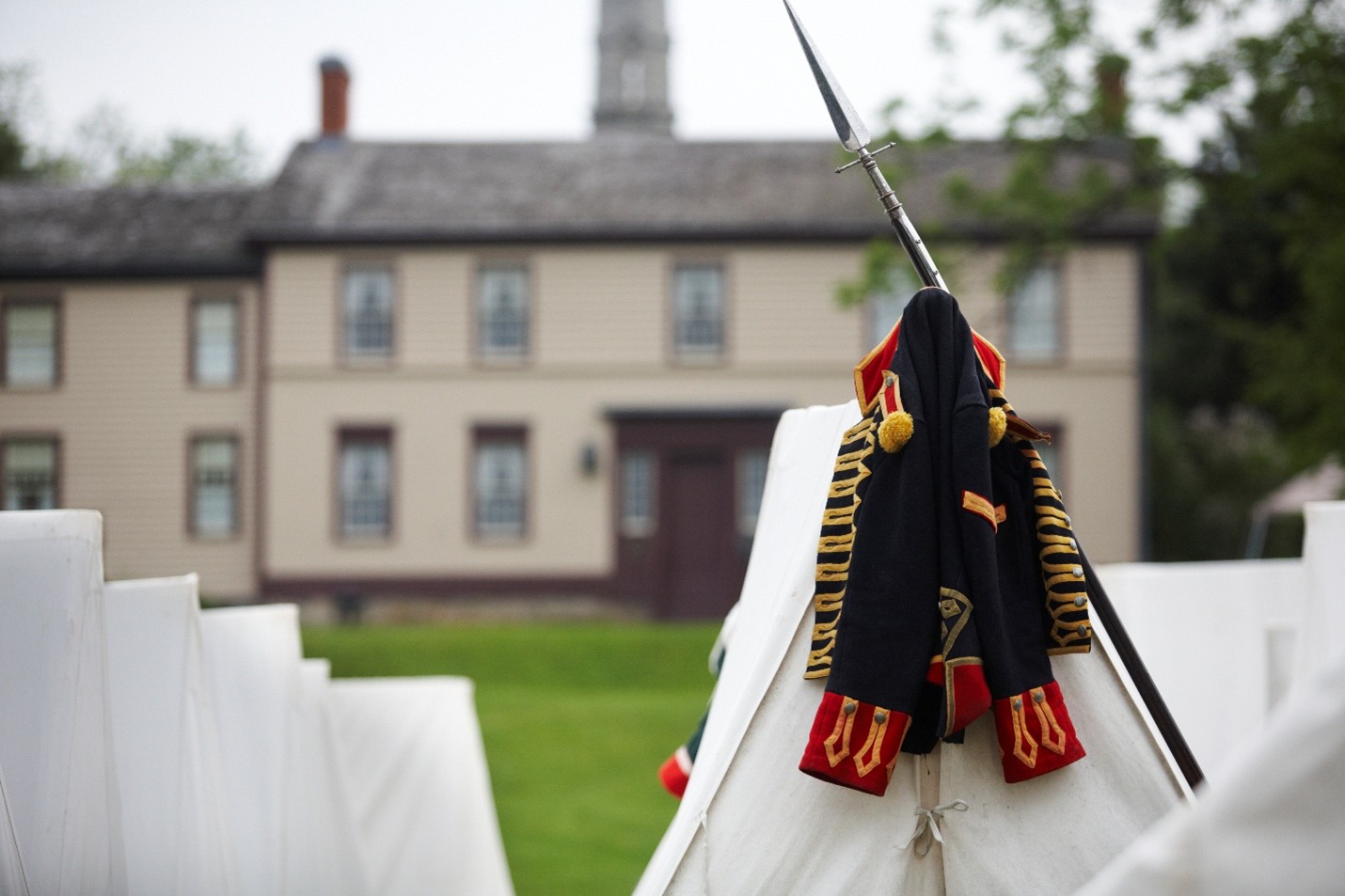
Just two months following the Battle of York, American troops set off for an aggressive military campaign in Upper Canada, and they began to advance toward Burlington. They made camp outside of Battlefield House, then the home of the Gage family who were still inside the homestead.
Billy Green, a local youth, learned of the Americans’ plans and rode on horseback to Burlington Heights to warn the British. With this critical information and surprise on their side, the British initiated an attack on the 3500 sleeping Americans in the dead of night. The Americans retreated to Fort George, resulting in a decisive victory for the British.
The Battle of Stoney Creek is considered to be a major turning point in the war, following the British losses at Fort George and York. Today, the Battlefield monument honours those who died in the battle and “Eagles Among Us” by Indigenous artist David General is dedicated to peace and reconciliation. Battlefield House, around which the Battle of Stoney Creek raged, is open to visitors and welcomes you to explore the history of the house and battle.
Dundurn Castle, Hamilton, ON
Dundurn Castle | City of Hamilton
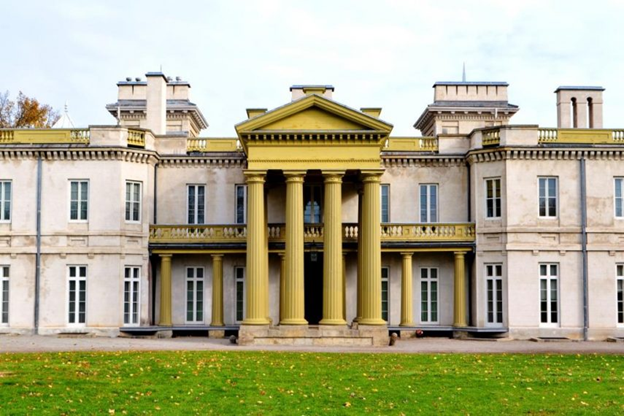
Before Dundurn Castle was built for Sir Allan Napier MacNab in the 1830s, Burlington Heights was the site of a fortified military encampment for the British from 1813 to 1815. Burlington Heights provided essential supply, refuge and defense for men, women and children, as well as for First Nations. It was from Burlington Heights that the British would launch their nighttime attack on the American troops at Battlefield.
The remnants of the military fortification are still visible at Dundurn Castle, including earthworks that were built as a line of defence. After the War of 1812 ended, the military barracks were used as a hospital for infectious diseases. When MacNab purchased the property, he built the 40-room Dundurn Castle, which incorporated many of the remaining features of the British encampment and makes some architectural references to the War of 1812, thus honouring the site’s history and strategic importance.
Hamilton Military Museum, Hamilton, ON
Hamilton Military Museum | City of Hamilton
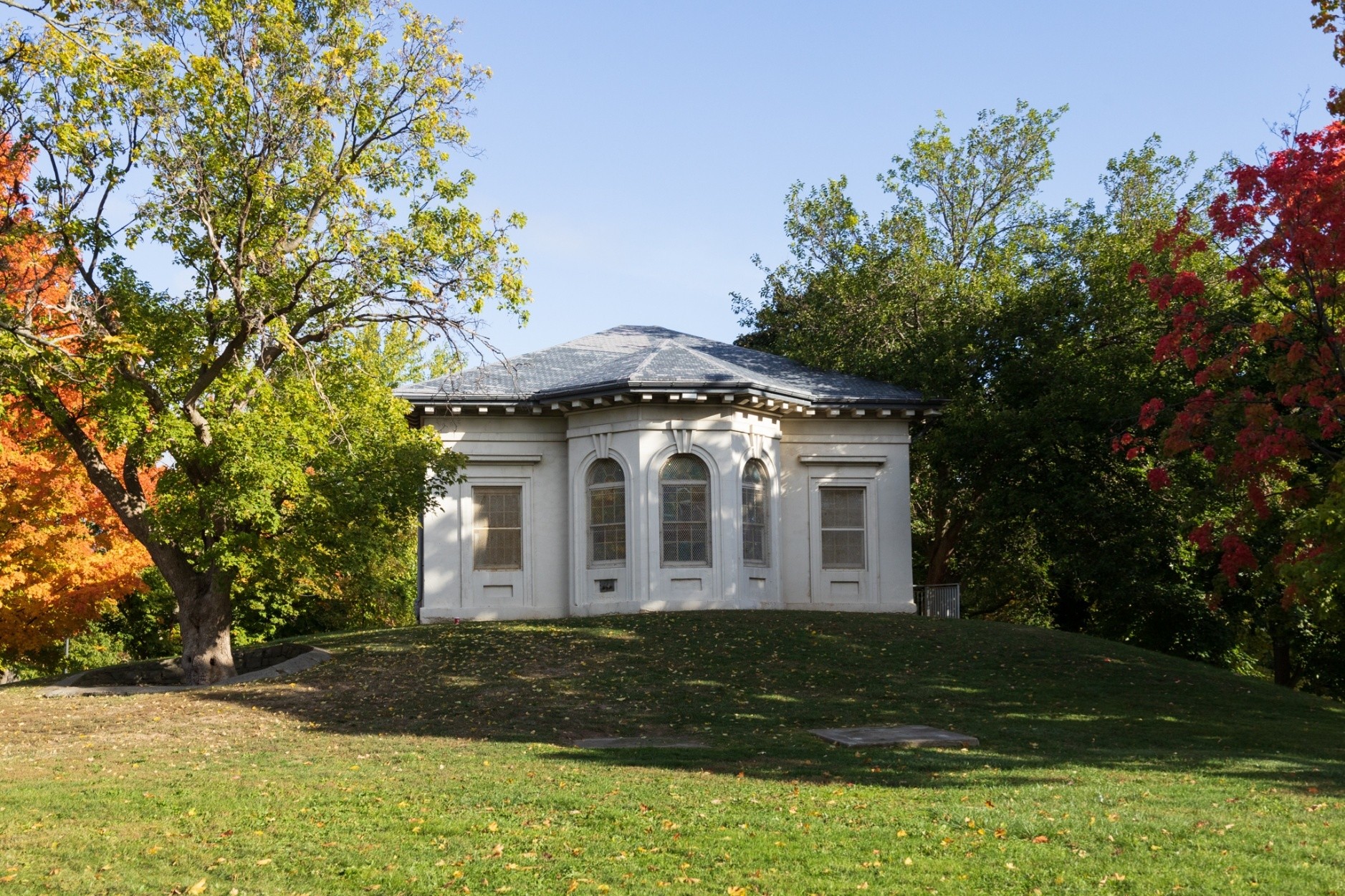
Located on the grounds of Dundurn Castle is the Hamilton Military Museum. The museum is housed within Battery Lodge, which was built in the 1830s as a gate house for the Dundurn Castle estate. It is called the Battery Lodge due to its position atop an 1812 battery (cannon platform).
The Hamilton Military Museum shares the story of Burlington Heights and its role in the War of 1812 through interactive and hands-on exhibits and displays, as well as other aspects of Hamilton’s military heritage.
Hamilton and Scourge National Historic Site, Hamilton, ON
Hamilton & Scourge National Historic Site | City of Hamilton
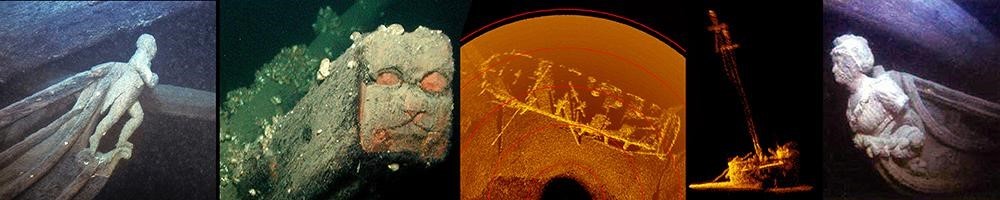
Originally built to be merchant schooners, the Hamilton and Scourge (which prior to the War of 1812 were called the Diana and Lord Nelson, respectively) were repurposed into gunships for the American Navy when the conflict began. They played key roles in the capture of Fort George in May 1813. They sank on August 8, 1813 as the result of a sudden squall. Although they did not sink as the result of a battle, their sinking resulted in the single greatest loss of life on the Great Lakes during the War of 1812.
The ships are remarkably well-preserved and are the only complete 1812 warships in the world. Diving to the ships is prohibited without a permit.
Niagara-on-the-Lake Museum, Niagara-on-the-Lake, ON
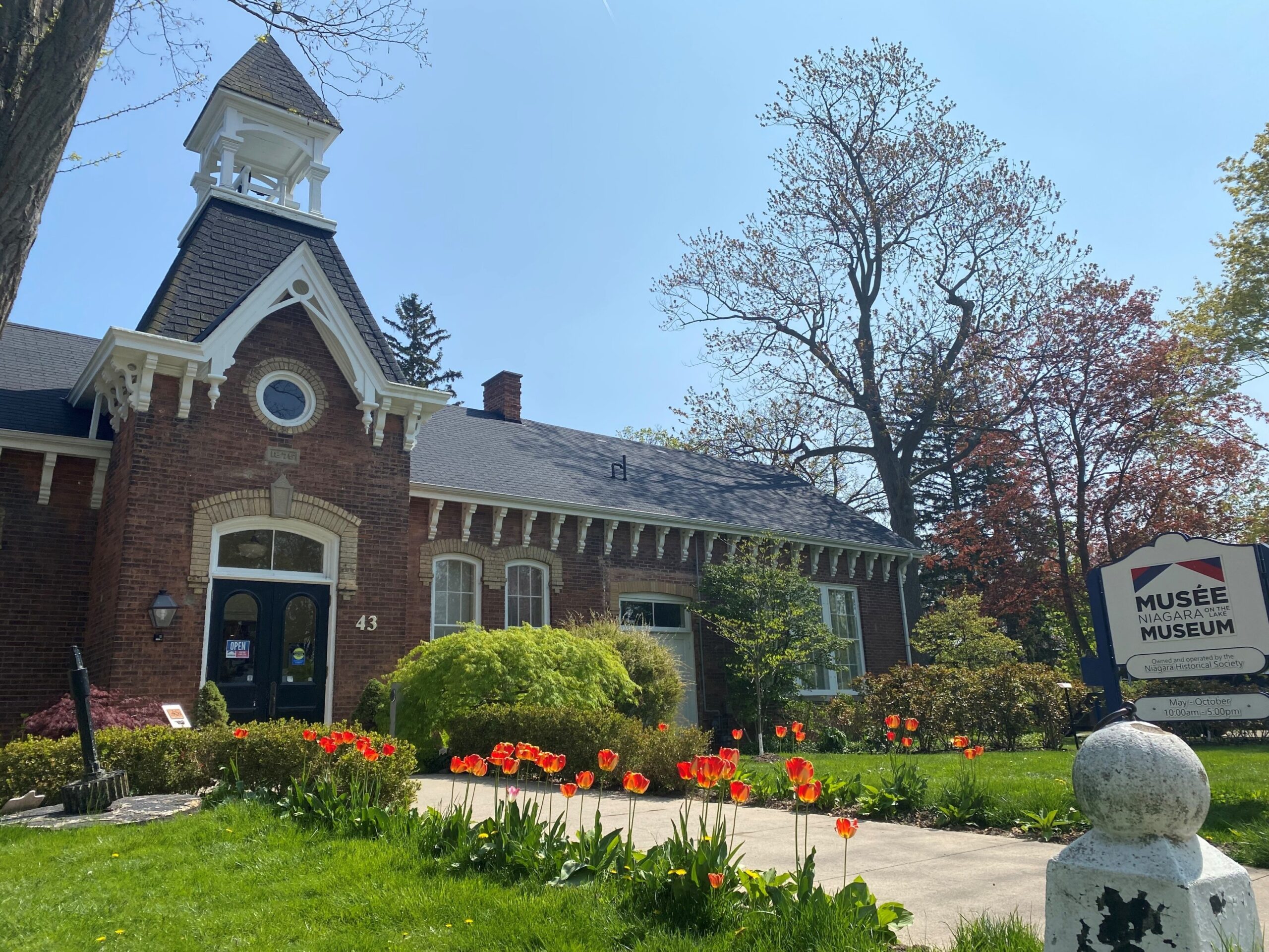
Niagara-on-the-Lake Museum | Niagara-on-the-Lake Museum
Due to its strategic location on the border between Canada and the United States, Niagara-on-the-Lake was placed at the center of the conflict. Battles and conflicts took place across the region, and are remembered at the Niagara-on-the-Lake Museum through exhibits and displays.
Among the artifacts on display are General Issaac Brock’s hat (1812), uniforms from the War of 1812, and more. The museum also has a virtual exhibit that details the story of Niagara-on-the-Lake throughout the War of 1812.
The above historic sites are part of the Trust’s Passport Places program, a National Trust membership benefit that provides free access to over 110 historic places in Canada, as well as 1000+ National Trust places abroad. Become a member today!